

Nobody really prepares you for the first few days of breastfeeding.
During pregnancy, you may hear that breastfeeding is natural and that your baby will instinctively know what to do. Then your baby arrives, and suddenly you are trying to figure out how to hold your baby, whether the latch is right, how often to feed, and why your nipples are sore.
If you are feeling a little overwhelmed, you are not alone. Breastfeeding is natural, but it is also a skill that both mother and baby learn together. The first few days can take some practice, and it is completely normal to have questions.
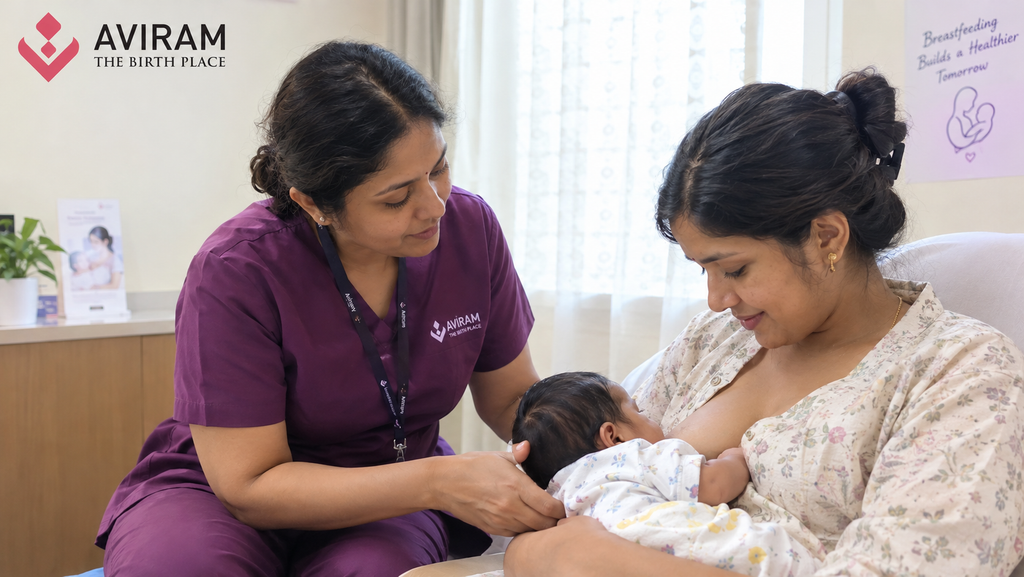
At Aviram The Birth Place, we encourage new mothers to take breastfeeding one feed at a time. Understanding a few breastfeeding basics can make those early days more comfortable and less stressful.
Breastfeeding Basics: Why Does Breastfeeding Matter?
Breast milk provides important nutrients, fluids and antibodies that support your baby’s growth and development. It is also easy for a newborn to digest.
For mothers, breastfeeding helps the uterus return towards its pre-pregnancy size after delivery and supports bonding between mother and baby.
The World Health Organization recommends starting breastfeeding within the first hour after birth, when possible, and exclusive breastfeeding for the first six months.
But breastfeeding does not look exactly the same for every mother and baby.
Some babies latch easily from the first feed. Others need a little more time and guidance. Some mothers have an easy start, while others experience soreness, engorgement or concerns about milk supply.
There is no single perfect breastfeeding journey. What matters is finding the right support for you and your baby.
Getting a Good Breastfeeding Latch
If there is one part of breastfeeding basics worth learning well, it is the latch.
A good latch helps your baby remove milk effectively while reducing unnecessary nipple pain. A shallow latch, on the other hand, can make feeding uncomfortable and may leave your baby struggling to feed effectively.
Signs of a Good Latch
A good latch usually means:
- Your baby’s mouth is wide open.
- Your baby takes in the nipple along with a good portion of the areola.
- The lips are turned outward.
- Your baby’s chin touches or rests close to your breast.
- Your baby’s nose remains free or only lightly touches the breast.
- You feel a gentle pulling or tugging sensation rather than sharp pain.
- You can hear or see your baby swallowing during the feed.
Some tenderness during the first few days can happen while you and your baby are learning. However, breastfeeding should not remain painful throughout the feed.
How to Help Your Baby Latch
- Hold your baby close to you, with your baby’s tummy facing yours.
- Keep your baby’s head, shoulders and hips comfortably aligned.
- Bring your baby towards the breast rather than leaning forward towards your baby.
- Gently touch your nipple to your baby’s upper lip.
- Wait for your baby’s mouth to open wide.
- Bring your baby close to the breast when the mouth is wide open.
- Make sure your baby takes in a good portion of the areola, not just the nipple.
If the latch hurts, you do not have to continue through the pain. Gently break the suction by placing a clean finger into the corner of your baby’s mouth and try again.
It may take a few attempts. That is normal.
If you continue to experience pain or your baby struggles to latch, a qualified lactation professional can assess the feed and help you find a more comfortable approach.
5 Comfortable Breastfeeding Positions
nce you and your baby are in a comfortable breastfeeding position, gently guide your baby towards the breast and help them achieve a good latch.
There is no single best breastfeeding position. Your delivery, your comfort and your baby’s feeding pattern can all influence which position works best.
Keep pillows nearby to support your arms and back. Your shoulders should feel relaxed rather than carrying all your baby’s weight.
1. Cradle Hold
This is one of the most familiar breastfeeding positions.
Your baby’s head rests in the bend of your elbow on the same side as the breast you are feeding from. Your baby’s body faces you, with the head and body comfortably aligned.
This position often becomes easier once you and your baby are more confident with breastfeeding.
2. Cross-Cradle Hold
In the cross-cradle position, you support your baby’s head with the hand opposite to the breast you are using.
For example, if your baby is feeding from your left breast, your right hand supports your baby’s head and neck.
This position gives you more control when guiding your baby towards the breast. It can be particularly useful for new mothers who are still learning how to achieve a good latch.
3. Football Hold
In the football hold, your baby is tucked alongside your body, under your arm, with your baby’s feet pointing towards your back.
This can be a comfortable option for mothers recovering from a C-section because the baby’s body can be kept away from the abdominal area.
It may also be useful for mothers feeding twins or those who find this position more comfortable for helping their baby latch.
4. Side-Lying Position
In the side-lying position, you and your baby lie on your sides facing each other.
Many mothers find this position comfortable during night feeds or when they need to rest after delivery.
Safety is important when feeding in bed. If you think you might fall asleep, make sure your baby is placed back in their own safe sleep space as soon as you wake or finish feeding. Always place your baby on their back to sleep.
5. Laid-Back Position
The laid-back position involves reclining comfortably with your baby resting against your body.
Your baby is placed tummy-down on your chest, with their head close to your breast. This position allows your baby to use natural reflexes to move towards the breast.
It can be a relaxing option during the early days when both mother and baby are still learning.
You can try different breastfeeding positions until you find the ones that feel most comfortable. If you have had a C-section or are experiencing pain, ask your healthcare provider for help with positioning.
How Often Should a Newborn Breastfeed?
Newborn babies have very small stomachs, so they usually need to feed frequently.
Many newborns breastfeed around 8 to 12 times in 24 hours, including during the night, although individual feeding patterns can vary.
Instead of watching the clock alone, learn to recognise your baby’s early hunger cues.
These may include:
- Turning the head towards the breast.
- Opening and closing the mouth.
- Bringing hands or fingers towards the mouth.
- Making sucking movements.
- Becoming more alert or restless.
Crying is usually a later hunger signal. A very upset baby may find it harder to settle and latch, so offering a feed when you first notice hunger cues can help.
During the early weeks, frequent feeding is common. If your baby is unusually sleepy, difficult to wake for feeds or not feeding effectively, seek advice from your healthcare provider.
How Can You Tell If Your Baby Is Getting Enough Milk?
It is common for new mothers to wonder whether their baby is drinking enough breast milk.
Some useful signs include:
- Your baby is having an appropriate number of wet diapers for their age.
- Your baby is passing stools appropriately for their age.
- You can hear or see swallowing during feeds.
- Your baby appears satisfied after many feeds.
- Your baby’s weight is being monitored and is progressing appropriately.
After the first week, six or more wet diapers a day is generally a reassuring sign for many babies. However, diaper expectations change during the first few days after birth.
If you are concerned about your baby’s feeding, diaper output or weight gain, do not rely on guesswork. Speak to your paediatrician or lactation support team.
Common Breastfeeding Problems and Easy Fixes
Even when you understand the breastfeeding basics, small problems can come up. Asking for help early can make these challenges easier to manage.
Sore or Cracked Nipples
Some tenderness during the first few days can happen. Persistent pain, cracked nipples or bleeding, however, may indicate that your baby is not latching deeply enough or that another issue needs attention.
Try checking your baby’s latch and adjusting your position during feeds.
If the pain continues or your nipples are cracked or bleeding, speak to a lactation professional or doctor rather than continuing through significant pain.
Breast Engorgement
When your milk supply increases a few days after delivery, your breasts may feel full, firm, heavy or uncomfortable.
Frequent breastfeeding can help. A warm shower or brief warm compress before feeding may make you more comfortable, while a cool compress afterwards can help reduce swelling.
Avoid excessive pumping just to empty the breasts, as this can sometimes encourage further milk production. If the discomfort is severe or does not improve, seek medical advice.
Blocked Ducts and Mastitis
A tender or swollen area of the breast may be caused by inflammation or a problem with milk flow.
Continue breastfeeding or expressing milk as advised, and avoid aggressive or deep massage, which can worsen inflammation.
If you develop breast redness, increasing pain, fever, chills or flu-like symptoms, you may have mastitis and should contact a doctor promptly. You may need medical treatment.
Worried About Low Milk Supply?
This is one of the most common concerns new mothers have.
During the first few days, your breasts produce colostrum. It comes in small quantities, but it is concentrated and suited to your newborn’s early needs.
Frequent feeding helps stimulate milk production.
Rather than judging milk supply by how your breasts feel or how often your baby wants to feed, look at your baby’s wet diapers, feeding behaviour and weight gain.
If you remain concerned, a lactation professional can assess your baby’s latch and feeding pattern and help identify whether there is a genuine supply issue.
When Family Advice Becomes Stressful
Family members usually mean well, but new mothers can sometimes hear conflicting advice.
You may hear things like, “The baby is crying, so your milk must not be enough.”
But babies cry for many reasons. Crying alone does not prove that a mother has low milk supply.
If you are unsure whether your baby is getting enough milk, look at the baby’s feeding, diapers and weight rather than relying only on opinions around you.
If needed, speak with your healthcare team. A little professional guidance can help make breastfeeding less stressful for the entire family.
When Should You Ask for Breastfeeding Support?
You do not need to wait until a problem becomes serious before asking for help.
Consider speaking to your doctor or lactation support team if:
- Breastfeeding continues to be painful.
- Your baby is struggling to latch.
- Your baby is having fewer wet diapers than expected.
- Your baby is unusually sleepy or difficult to wake for feeds.
- Your baby is not gaining weight as expected.
- You develop a fever along with breast pain or redness.
- You have a painful breast lump that does not improve.
- You are worried about your milk supply.
If your baby is difficult to wake, refuses feeds or shows signs of dehydration, seek prompt medical assessment.
Getting help early does not mean you are failing at breastfeeding. It simply means you and your baby may need some guidance while learning together.
Breastfeeding Support in Coimbatore
For many new mothers, having someone to guide them through the early days can make a real difference.
If you are looking for breastfeeding support in Coimbatore, Aviram The Birth Place is a place to explore maternity and postnatal care options, including breastfeeding and lactation guidance.
From understanding your baby’s latch and finding a comfortable breastfeeding position to discussing common feeding concerns, appropriate guidance can help you feel more confident during the early weeks.
Every mother and baby is different. You may need a little help with positioning, reassurance about feeding patterns or advice about a specific concern. Asking questions is a normal part of the process.
If you need support, contact Aviram The Birth Place to learn more about the available services and appointment options.
Learn more about breastfeeding recommendations from the World Health Organization.
Need breastfeeding or postnatal support in Coimbatore? Contact Aviram The Birth Place to enquire about available care and guidance.
Frequently Asked Questions About Breastfeeding
How do I know if my baby has a good latch?
Your baby’s mouth should be wide open, with the lips turned outward and a good portion of the areola inside the mouth. You should feel a gentle pulling sensation rather than sharp or persistent pain.
Learning breastfeeding basics can help you recognise a good latch and understand when to seek feeding support.
How often should a newborn breastfeed?
Most newborns breastfeed around 8 to 12 times in 24 hours, although individual babies may feed more frequently. Follow your baby’s hunger cues and your healthcare provider’s advice.
How can I tell if my baby is getting enough breast milk?
Wet diapers, stools, swallowing during feeds, your baby’s behaviour after feeds and appropriate weight gain are useful signs. Your baby’s weight should be monitored regularly during the early weeks.
Is nipple pain normal during breastfeeding?
Some tenderness can occur during the first few days. Persistent pain, cracking or bleeding may indicate a latch problem or another issue and should be assessed.
Which breastfeeding position is best after a C-section?
The football hold and side-lying position may be comfortable for some mothers because they can reduce pressure around the abdominal area. Choose a position that supports your body and allows your baby to latch comfortably.
When should I see a doctor about breastfeeding problems?
Seek medical advice if you have fever with breast pain or redness, a painful lump that does not improve, or if your baby is feeding poorly, has fewer wet diapers than expected, is unusually sleepy or is not gaining weight as expected.
Medical Disclaimer
This article is intended for general educational purposes and does not replace individual medical advice. Every mother and baby has different needs. If you or your baby have specific feeding concerns, please consult your doctor, paediatrician or a qualified lactation professional.
Recent Posts





Author
