
Medically Reviewed By: Dr. S. K. Saranya, Fertility & Laparoscopic Surgeon | Nutrition Inputs: Sharmila Thangaraju, Clinical Nutritionist, Aviram – The Birthplace Last Updated: August 2026
“Am I eating right for my baby?” It’s one of the first questions almost every expecting mother asks us at Aviram. And honestly, it’s a good question to ask — because what you eat over these nine months does shape how your baby grows, and how you feel along the way.
Here’s the thing though: pregnancy nutrition doesn’t mean eating for two people. It means eating well for two — with a bit more intention than usual. We’ve worked with hundreds of expecting mothers at Aviram – The Birthplace, a fertility and maternity care unit of KGM Hospital, and the mothers who feel most confident are usually the ones who understand the “why” behind their diet, not just a list of dos and don’ts.
So let’s get into it — the nutrients that matter most, what to eat, what to be careful with, and a few practical habits that make this easier day to day.
Medical Disclaimer: This article is for general informational purposes and doesn’t replace personalised medical advice. Every pregnancy is different, so please check with your gynaecologist or a qualified nutritionist and dietitian before making any significant changes to your diet or starting a new supplement.
Why Pregnancy Nutrition Actually Matters
Your body is doing a lot of quiet, invisible work right now — building your baby’s organs, bones, brain, and an entirely new blood supply to support it all. A good diet during this time helps with:
- Healthy fetal growth and brain development
- Lowering the risk of birth defects and low birth weight, miscarriages
- Keeping your energy up and fatigue in check
- Strengthening your immunity through the pregnancy
- Preparing your body for labour, delivery, and breastfeeding
On the flip side, when nutrition falls short, the risks go up too — gestational diabetes,hypothyroidism, anaemia, preeclampsia, and developmental concerns for the baby are all more likely.”That’s really the crux of why we keep coming back to pregnancy nutrition as a topic with our patients.
The World Health Organization’s antenatal care guidelines actually list maternal nutrition as one of the key levers for reducing pregnancy complications — and that’s exactly the principle we lean on when counselling mothers at Aviram
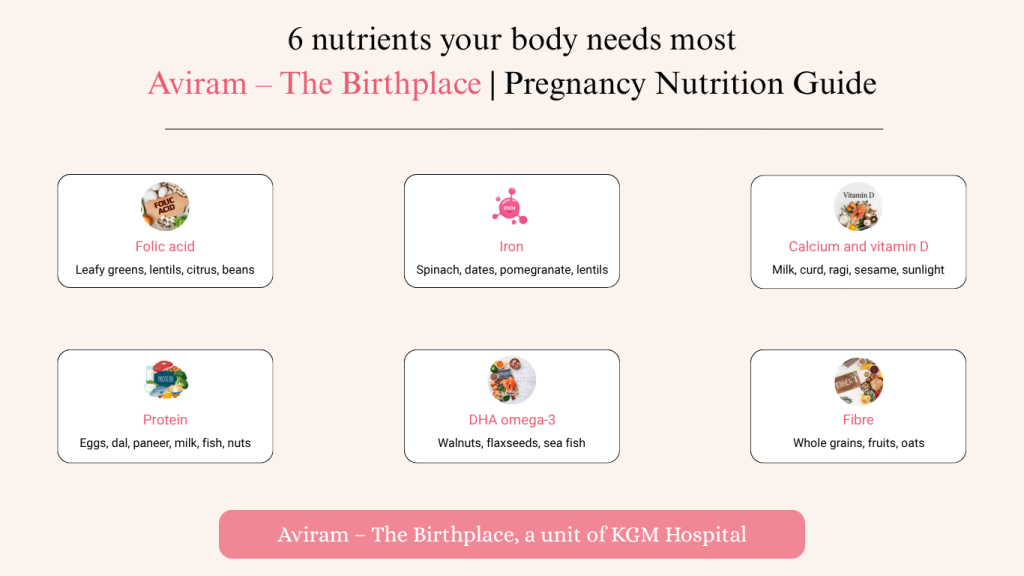
The Nutrients Your Body Needs Most Right Now
Folic Acid (Folate)
This one’s especially important in the first trimester, since it helps prevent neural tube defects affecting the baby’s brain and spine. Most doctors will actually recommend starting folic acid before you even conceive, if possible.
Where to get it: Leafy greens, lentils, citrus fruits, fortified cereals, beans
Iron
Your blood volume increases significantly during pregnancy, and iron helps keep up with that demand. Anaemia is fairly common among expecting mothers here in India, so this one deserves real attention.
Where to get it: Spinach, dates, pomegranate, organ meat, lentils
Calcium and Vitamin D
Think of calcium as the building block for your baby’s bones and teeth. Vitamin D’s job is to help your body actually absorb that calcium properly — the two work as a pair.
Where to get it: Milk, curd, ragi, sesame seeds, fortified foods, mushrooms, and regular sunlight exposure
Protein
Protein supports the growth of your baby’s tissues and organs, and it also plays a role in how well the placenta develops.
Where to get it: Eggs, dals, paneer, milk, chicken, fish, nuts
DHA (Omega-3 Fatty Acids)
This is a big one for baby’s brain and eye development, particularly as you move into the third trimester.
Where to get it: Walnuts, flaxseeds, sea fish in moderation, fortified foods
Fibre
If constipation has become an unwelcome companion during pregnancy, fibre is your answer. It also helps keep blood sugar levels steadier through the day.
Where to get it: Whole grains, fresh fruits & vegetables, oats
What to Eat More Of
- Whole grains — brown rice, millets, oats, whole wheat
- Fresh fruits and vegetables — the more colours on your plate, the better the range of vitamins
- Dairy — milk, curd, paneer for calcium and protein
- Lean protein — eggs, dal, fish, lean poultry
- Nuts and seeds — almonds, walnuts, flaxseeds, chia seeds in reasonable portions
- Water — aim for 2.5 to 3 liters a day; your blood volume and amniotic fluid both depend on it
What to Go Easy On (or Avoid Entirely)
- Raw or undercooked eggs, meat, and seafood
- Unpasteurised dairy
- High-mercury fish like king fish or shark, especially in large amounts
- Too much caffeine— try to stay under 1–2 cups a day
- Large quantities of raw papaya or pineapple, particularly early on
- Alcohol and smoking — no exceptions here
- Excess sugar and heavily processed food
If you’re ever unsure whether a specific food is okay, don’t guess — ask your gynaecologist or nutritionist. It’s a quick question that saves a lot of unnecessary worry.
How Your Focus Shifts Through Each Trimester
First Trimester: Folic acid is priority number one. Nausea can make eating difficult, so smaller, more frequent meals tend to help. Stay hydrated even when food feels unappealing.
Second Trimester: This is when calorie needs go up a bit, and iron and calcium become more important as your baby grows quickly.
Third Trimester: DHA, protein, and fibre take centre stage now, and hydration remains just as important as your body gets ready for delivery.
A Few Habits That Make This Easier
- Smaller, more frequent meals tend to work better than three big ones — easier on energy levels and nausea alike.
- Keep fruit or a small handful of nuts nearby for when hunger strikes between meals.
- Home-cooked food, where possible, beats processed or outside food most days.
- Don’t skip breakfast — it really does set the tone for your blood sugar for the rest of the day.
- Supplements should support your diet, not replace it — and only take what your doctor has actually prescribed.
- Trust your hunger and fullness cues rather than forcing yourself to “eat for two.”
Why One-Size-Fits-All Advice Doesn’t Really Work
Here’s something worth remembering: no two pregnancies — or their pregnancy nutrition needs — are the same. Your nutritional needs depend on your health history, your BMI, conditions like PCOS or thyroid imbalance, and simply how your particular pregnancy is unfolding. At Aviram – The Birthplace, we build nutrition plans around the person in front of us — not a generic template pulled off the internet.
If you’re pregnant, planning to be, or going through fertility treatment this kind of personalised guidance can genuinely change how comfortable and confident you feel through the process.
Why Mothers Trust Aviram – The Birthplace
Aviram functions as a specialised fertility and maternity care unit within KGM Hospital, which has served Coimbatore for over 25 years now. Our take on pregnancy nutrition isn’t pulled from generic wellness blogs — it comes from:
- Real clinical experience: Our specialists, led by Dr. S. K. Saranya, work directly with expecting mothers on pregnancy and fertility care, with nutrition counselling built into treatment plans — not offered as an afterthought.
- A team, not just one voice: Fertility specialists, clinical nutritionists, and embryology support all work together, so nutrition advice actually fits each patient’s medical picture.
- Food that makes sense locally: Our recommendations lean on familiar South Indian foods and eating habits, not imported meal plans that don’t quite fit daily life here.
- A hospital behind us: Being part of a 25-year multispeciality hospital means Aviram can bring in broader medical support whenever a pregnancy needs more than nutrition guidance alone.
Questions Mothers Often Ask Us
1. How many extra calories do I actually need during pregnancy? Roughly 300–450 extra calories a day during the second and third trimesters for most women — though this varies, so it’s worth confirming with your doctor.
2. Can I stay vegetarian through my pregnancy? Yes, absolutely — a well-planned vegetarian diet can cover all your nutritional bases, as long as protein, iron, calcium, and B12 are accounted for.
3. Is tea or coffee off-limits now? Not entirely. Moderate caffeine — around 1–2 cups a day — is generally fine, but it’s worth discussing your specific intake with your doctor.
4. What actually helps with pregnancy constipation? Fibre-rich foods like whole grains, fruits, and vegetables, paired with enough water, usually make a real difference.
5. If I’m eating well, do I still need supplements? Most doctors will still recommend folic acid, iron, and calcium supplements, since diet alone often can’t quite keep up with pregnancy’s demands. Follow your doctor’s prescription here rather than self-deciding.
6. When should I start thinking about pregnancy nutrition?Ideally, pregnancy nutrition planning should start even before you conceive — folic acid especially — and then continue all the way through pregnancy into postpartum recovery.
References
- World Health Organization – WHO Antenatal Care Guidelines for a Positive Pregnancy Experience
- Indian Council of Medical Research (ICMR) – Dietary Guidelines for Indians
- Federation of Obstetric and Gynaecological Societies of India (FOGSI) – Maternal Nutrition Recommendations
This content has been reviewed by Aviram’s clinical team to ensure medical accuracy and relevance to Indian dietary patterns.
Ready to Begin Your Pregnancy Journey with Expert Support?
At Aviram – The Birthplace, a unit of KGM Hospital, our specialists are here to guide you through every stage — from preconception to delivery — with personalised care and evidence-based nutrition guidance.
Book a consultation today and take the first confident step toward a healthy pregnancy.
Recent Posts



Author
